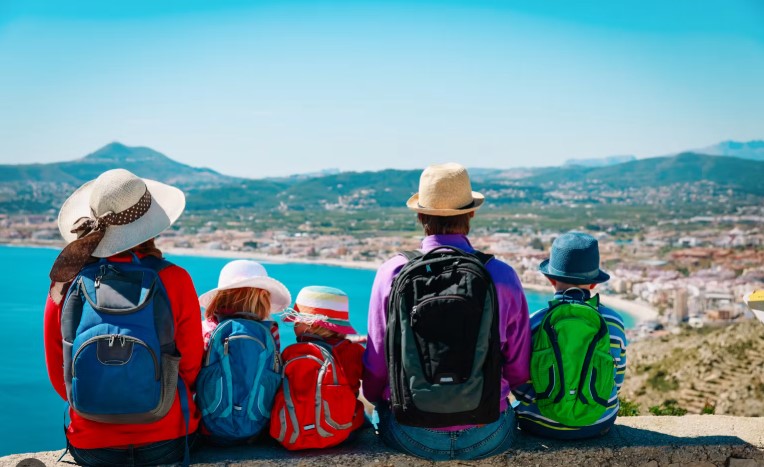
Learning does not always have to take place in a classroom. Some of the most memorable lessons happen when people leave familiar surroundings and experience a different culture directly.
Travel is a good example. A journey to another country can introduce travellers to new languages, traditions, food, history and ways of communicating. Even simple activities such as ordering breakfast, reading a road sign or asking for directions can become small learning experiences.
This is one reason why travelling can be particularly valuable for people who enjoy learning languages. Instead of memorising isolated words from a textbook, travellers encounter those words in real situations where they have an immediate purpose.
Language becomes more meaningful when it is used in real life
Studying vocabulary from a list can be useful, but remembering a word connected to a real experience is often much easier.
Imagine arriving in a small Spanish town and trying to understand a restaurant menu. You may recognise several words from previous lessons, but now those words have a practical purpose. You need to understand them to decide what you want to eat.
The same happens with signs, transport information, directions and everyday conversations.
Travelling therefore creates a natural connection between language and experience. A word is no longer just something to remember for a test. It becomes something that helped you find a place, communicate with someone or understand what was happening around you.
Independent travel encourages curiosity
Organised tours can be convenient, but travelling independently often creates more opportunities for discovery.
When there is no fixed schedule for every hour of the day, travellers can stop somewhere simply because a place looks interesting. They may discover a local market, speak with residents or visit a small town that was not originally included in the itinerary.
This type of travel encourages curiosity.
Instead of simply following a list of famous attractions, travellers begin asking questions. Why does this town look different from the previous one? What does this local tradition mean? Why is a particular dish popular here?
These questions naturally lead to learning.
Road trips offer a different kind of education
A road trip can be especially interesting because the journey itself becomes part of the experience.
Travelling by road allows people to see how landscapes, architecture and local customs change from one region to another. A single trip can include beaches, mountains, historic towns and modern cities.
Spain is a good example of this variety. A journey can begin on the Mediterranean coast and continue inland, with completely different landscapes and local traditions appearing along the way.
For travellers interested in this type of experience, a different way to explore Spain can make it possible to combine several destinations instead of staying in one location.
The vehicle can become part of the learning experience
Choosing how to travel also influences the experience.
Hotels and traditional holidays often encourage travellers to think in terms of individual destinations: arrive at a city, visit its attractions and then move to the next hotel.
Travelling in a motorhome creates a different rhythm. The road becomes part of the holiday, and travellers can decide where to stop and how long to stay.
There is also a practical learning element. Travellers learn how to organise their space, plan fuel stops, manage their time and adapt to changing circumstances.
For those considering this type of trip, a selection of motorhomes and campervans for different travel styles can help them understand how different vehicles may suit different journeys.
Food is another way to learn about a culture
Food provides one of the easiest ways to connect with a new culture.
Trying local dishes introduces travellers to ingredients, cooking traditions and customs that may be completely unfamiliar. Even a simple conversation with a waiter or market seller can introduce new vocabulary.
Food can also reveal differences between regions.
In Spain, for example, culinary traditions vary considerably between coastal and inland areas. Travelling through several regions gives visitors an opportunity to experience those differences directly rather than simply reading about them.
Keeping a small travel journal can make these experiences even more useful. Writing down the names of unfamiliar dishes, useful expressions or interesting cultural observations creates a personal record that can be revisited later.
Travel teaches practical communication skills
One of the most useful things travel can teach is how to communicate when you do not know every word.
Language learners sometimes worry about making mistakes. Travelling shows that communication is about much more than perfect grammar.
Gestures, context, facial expressions and simple phrases can often be enough to solve a problem.
A traveller who has successfully asked for directions despite knowing only basic vocabulary may become much more confident about using the language in the future.
These experiences can also make people more comfortable with making mistakes. Instead of seeing an incorrect sentence as a failure, they begin to see it as part of the learning process.
Technology makes independent learning easier
Modern technology has made this type of travel-based learning even more accessible.
Translation applications can help when a word is unfamiliar. Digital maps can explain where a place is located. Online resources can provide information about local history, traditions and attractions.
However, technology works best when it supports curiosity rather than replacing it.
Looking up the meaning of a word is useful, but trying to understand it from context first can be even more rewarding. Similarly, reading about a destination before visiting it can make the real experience more meaningful.
Every journey can become a lesson
The most interesting aspect of learning through travel is that there is no fixed curriculum.
One day the lesson may be a new word. The next day it may be a conversation with a local resident. Another day it could be understanding a historical tradition, discovering a regional dish or simply learning how to solve an unexpected problem.
That flexibility is what makes travel such a powerful educational experience.
People do not need to travel to the other side of the world to benefit from it. Even a short trip to another region can provide new perspectives and opportunities to learn.
The key is to remain curious.
When travellers pay attention to the language around them, talk to local people, try unfamiliar things and explore beyond the most obvious tourist attractions, a holiday can become much more than a break from everyday life.
It can become an adventure in learning.